The independent appliance repair shop across the Southeast
Stove & Range Repair — Book a Visit Today
We repair gas and electric ranges, cooktops, and ovens, and you can call us to get on the schedule. Most of what we find comes down to igniters, safety valves, surface elements, temperature sensors, or a relay that quit switching. A burner that clicks and clicks but never lights, a coil that glows on one side, an oven that reads 350 and bakes closer to 275, a control board that locks the door and flashes a code nobody can decode: different symptoms, short list of causes. Our technicians pull the machine out, test the parts under power, and tell you what failed and why. Gas work gets a leak check before we leave. On electric we inspect the wiring and terminal block too, since scorched connectors kill more burners than bad elements do. We are an independent shop and we work on all major brands.
Call (888) 826-9217- You reach a person, not a menu
- Open every day
- The quote comes first, in writing
Taking calls until 5:00 PM CT
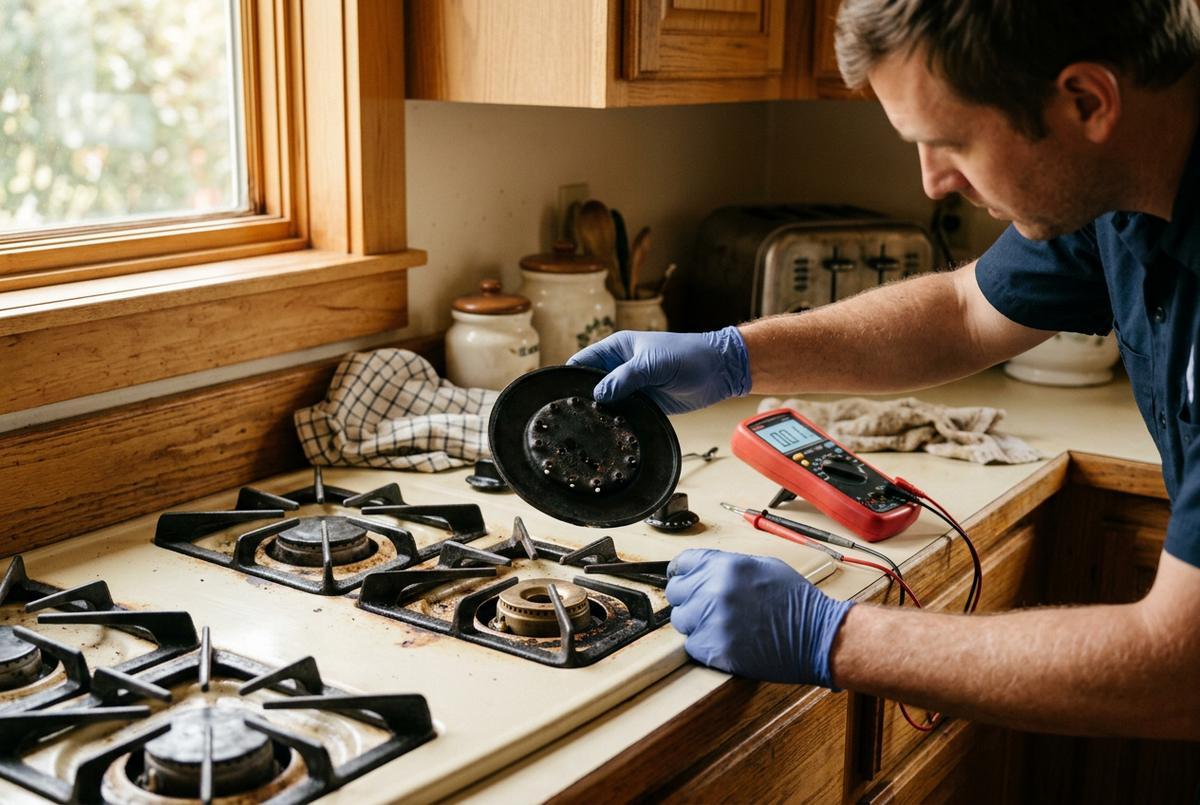
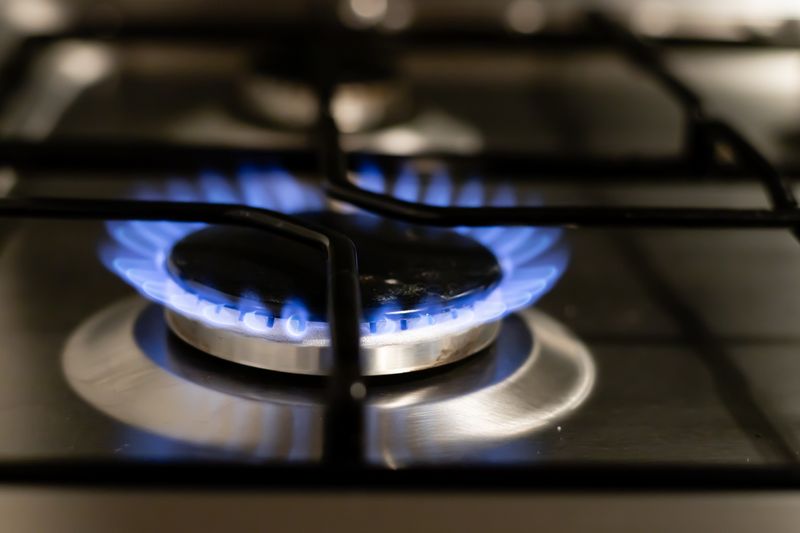
The stove & range symptoms we hear most
- Burner clicks but won't light Usually a worn spark igniter or a burner port packed with food. Moisture under the cooktop will also keep the spark module firing.
- Oven runs hot or cold no matter the setting That points to a temperature sensor that has drifted, a control that needs calibration, or a bake element cycling wrong.
- I smell gas near the range Stop, shut the supply off, and get us out. A loose fitting, cracked orifice, or failing safety valve needs hands-on testing instead of guessing.
- Front element works, back one is dead One dead burner usually traces back to a burnt receptacle, a failed switch, or a broken element coil, not the whole cooktop.
- Display flashes a code and everything locks up Control board and door-lock faults throw codes. Sometimes the trouble is in the sensor circuit the board is reading, not the board.
Safe things to check first
Worth a look before you call — sometimes it saves you the visit.
- 1Confirm the range is plugged in all the way and that its breaker hasn't tripped at the panel.
- 2Find the gas shutoff behind or under the range and make sure that valve is open.
- 3Pull the burner caps off a gas cooktop and clear crumbs or spillover out of the port holes with a dry brush.
- 4See whether the oven is sitting in Sabbath mode, delay start, or control lock. Those settings act just like a dead oven.
Why homeowners pick a local independent shop
| ACR Service Inc | Big-box repair chains | Handyman listings | |
|---|---|---|---|
| Quote in writing before a wrench comes out | ✓ | ✕ | ✕ |
| Phones answered by people, every day | ✓ | ✕ | ✓ |
| All major brands, gas and electric | ✓ | ✓ | ✕ |
| Independent, no manufacturer quotas | ✓ | ✕ | ✓ |
| Crews familiar with homes like yours | ✓ | ✕ | ✓ |
What homeowners say after the visit
“Dryer squealed like a train. New rollers, quiet laundry room, happy family.”
Gus P.Louisville, KY“Explained the difference between the cheap fix and the durable fix, then let me pick.”
Nadia H.New Orleans, LA“Fridge died the week groceries were stocked for a birthday. They squeezed us in same day.”
Cliff T.Meads, KYStove & Range Repair — quick answers
Is a stove worth repairing or should I replace it?
Depends on what failed. Igniters, elements, sensors, switches, and valves are routine parts on most ranges. If we find a cracked cooktop or heavy internal corrosion, we'll say so plainly and you can decide from there.
Do you work on gas and electric both?
Yes. Gas ranges, electric coil and smooth-top, dual fuel, and slide-in models. On gas calls we check the connections for leaks after the repair, because a tight fitting matters as much as the part we replaced.
Can I keep using the oven if only one burner is out?
On electric, often yes, since the oven runs on a separate circuit path. With gas, if you smell gas or see yellow flames, shut it off and leave the appliance alone until a technician has looked at it.
Why does my oven take so long to preheat now?
A weak bake element heats slower than it should, and so does a gas igniter that has lost resistance. Igniters degrade before they quit outright. A blocked vent or a door gasket that no longer seals will bleed heat during preheat as well.
Do you have parts on the truck?
Technicians carry common igniters, sensors, elements, and switches. Model-specific boards and glass tops usually get ordered once we confirm the part number, then we come back to install.
What should I do before the technician arrives?
Clear the floor in front of the range and empty the oven. If it's a slide-in, we may need to pull it out, so move any rugs or trash cans that are close. Have the model number handy if you can find it.
How it works
- Step 1
Tell us the symptom
Call us or fill out the form. Describe what the appliance does and does not do. Noises, error codes, smells, puddles. Brand and model help. That detail lets us plan the visit right.
- Step 2
We diagnose in person
A technician comes to your kitchen or laundry room and tests the machine instead of guessing. Controls, heating parts, motors, seals, drains. You hear what failed and what the repair involves before work starts.
- Step 3
You approve the repair
Nothing gets replaced until you say go. Common parts are handled on site when we have them. If a part must be ordered, we tell you that up front and schedule the return.
- A real person answers
- Open 7 days
- Written quote before work starts
Why homeowners call us
- Symptoms, not scriptsA washer that fills but never spins is a different problem than one that spins but never drains. We ask questions that narrow it down, then confirm with testing. Guesswork wastes parts and your afternoon.
- Independent and brand-wideWe are not tied to any manufacturer. That means we work on the big laundry and kitchen names side by side, and we recommend the repair that makes sense for your machine, not one brand's playbook.
- Regional coverageBased in Huntsville, we serve homeowners in Alabama, Georgia, Tennessee, Kentucky, Mississippi, Louisiana, Arkansas, North Carolina and South Carolina. One number to call whether you are in a city neighborhood or a small town outside it.
- Straight explanationsYou will hear what part failed and why, in plain words. If a machine is worn past sensible repair, we say so. Homeowners make better decisions when nobody is hiding behind jargon.
- All major brands, gas & electricIndependent service on Whirlpool, LG, Samsung, GE, Maytag, Bosch, KitchenAid and the rest.
- Straight answersSome machines aren't worth the part, and we say so before you spend anything.
Stove & Range Repair
Small faults become big ones on a schedule of their own
Describe the symptoms and we'll book the visit — takes about a minute.
- A real person answers
- Open 7 days
- Written quotes
- All major brands
- Gas & electric
Rather not call? Get a free quote →