The independent appliance repair shop across the Southeast
Microwave Repair — Book a Visit Today
We repair microwaves that won't heat, won't start, spark, or hum, countertop and built-in and over-the-range alike. The cause usually sits in one of a few places. Magnetrons weaken, high-voltage diodes short, door switches wear out until the unit refuses to run. Touchpads go dead in spots and turntable motors seize. Over-the-range models add a vent fan and a cooktop light to the list. When our technician arrives, we confirm the complaint, discharge the high-voltage capacitor before anything else, then test the door interlocks, controls, and heating circuit in that order. You get a clear explanation of the failed part and what the repair involves. Call us and tell us what the microwave is doing.
Call (888) 826-9217- You reach a person, not a menu
- Open every day
- The quote comes first, in writing
Taking calls until 5:00 PM CT
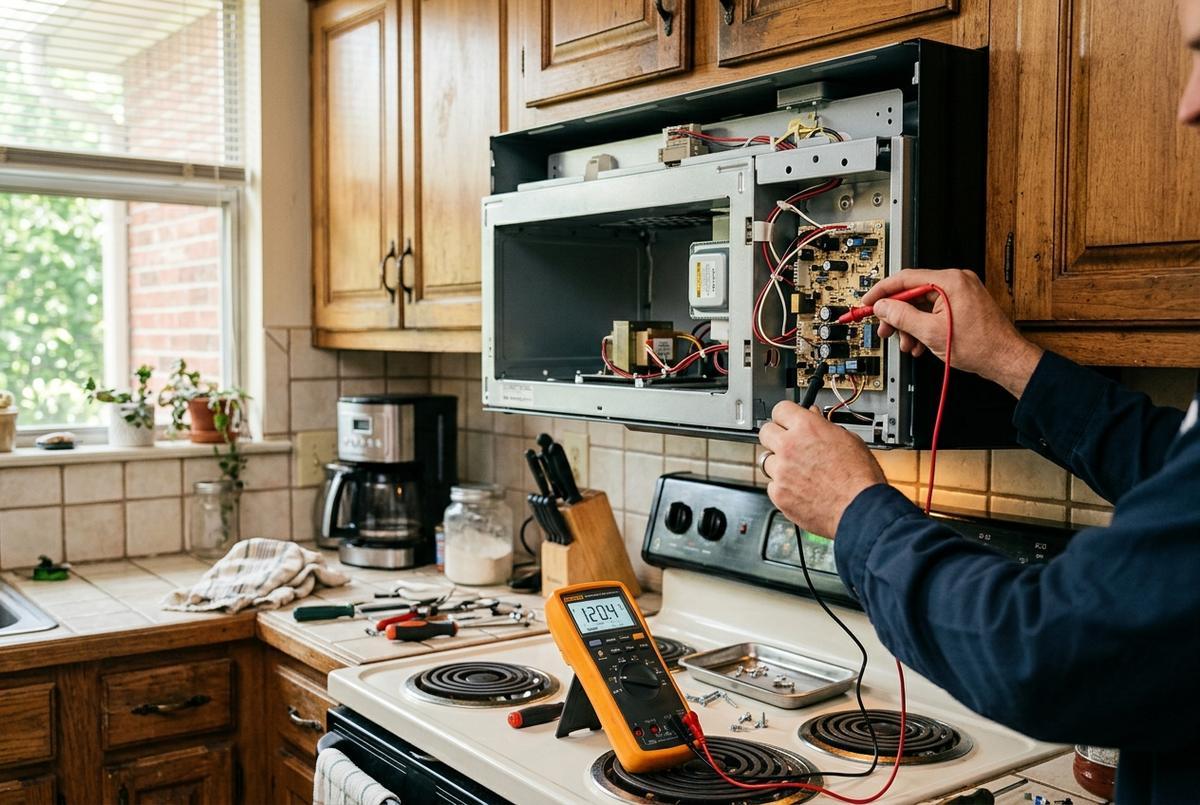
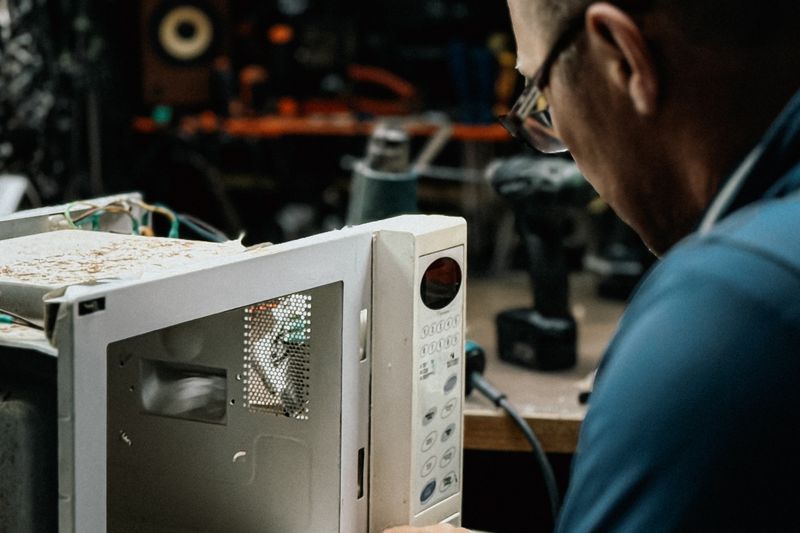
The microwave symptoms we hear most
- Runs the full time but the food comes out cold That's a high-voltage failure. Usually a tired magnetron, an open diode, or a blown high-voltage fuse.
- Loud buzzing or humming when it starts A failing magnetron or an arcing high-voltage transformer will often announce itself with a heavy hum under load.
- Burning smell or sparks inside the cavity Waveguide cover damage, food residue, or chipped cavity coating lets microwaves arc against metal.
- Nothing happens when I press start Points to a door interlock switch, a tripped thermal cutout, a line fuse, or a dead control board.
- Plate stopped spinning so one side stays frozen Turntable motor, drive coupler, or roller guide. The heating circuit itself is usually fine.
Safe things to check first
Worth a look before you call — sometimes it saves you the visit.
- 1Plug the microwave into a different outlet to rule out a tripped breaker or a dead GFCI.
- 2Close the door firmly and listen for the latch clicking. A door that doesn't seat fully will block operation.
- 3Lift out the glass tray and roller ring, wash them, and make sure the coupler underneath sits flat on the shaft.
- 4Look at the small mica panel on the cavity wall. If it's scorched or flaking, stop using the unit and call us.
Guides & troubleshooting
Why homeowners pick a local independent shop
| ACR Service Inc | Big-box repair chains | Handyman listings | |
|---|---|---|---|
| Quote in writing before a wrench comes out | ✓ | ✕ | ✕ |
| Phones answered by people, every day | ✓ | ✕ | ✓ |
| All major brands, gas and electric | ✓ | ✓ | ✕ |
| Independent, no manufacturer quotas | ✓ | ✕ | ✓ |
| Crews familiar with homes like yours | ✓ | ✕ | ✓ |
What homeowners say after the visit
“Third generation machine in our family and they treated it with respect instead of pushing something new.”
Ben H.Louisville, KY“The tech double-checked gas connections before leaving even though the job was electric. Careful people.”
Lois W.New Orleans, LA“From first call to spinning drum, under 30 hours. Everything in writing.”
Cole R.Meads, KYMicrowave Repair — quick answers
Is a microwave that stopped heating worth repairing?
Often yes, especially for built-in and over-the-range units where replacement means cabinet work. The heating circuit is a handful of testable parts. We diagnose, tell you exactly what failed, and let you decide before we order anything.
Why is opening a microwave dangerous for me to do?
The high-voltage capacitor can hold a lethal charge long after you unplug the unit. Our technicians discharge it as a first step, with the right tools. That one hazard is the main reason microwaves aren't a DIY job.
Can you fix a microwave built into my cabinets?
Yes. Built-in and trim-kit models come out for service and go back in. We check that the vent path stays clear and the unit seats correctly, because a pinched exhaust cooks the electronics over time.
My over-the-range fan runs but the light won't come on. Same repair?
Different circuit, same visit. Cooktop lamps, sockets, and the switch that feeds them fail independently of the heating side. We test both while we're there so nothing gets missed.
How long does a typical microwave repair take?
Diagnosis is usually quick. If we carry the failed part, many repairs finish in one visit. Control boards and magnetrons for less common models sometimes have to be ordered, and we'll tell you that on the spot.
Should I keep using it if it sparks now and then?
No. Stop and unplug it. Arcing means microwave energy is hitting metal or damaged material inside, and that can burn through the cavity and ruin the magnetron. Call us instead of running one more cycle.
How it works
- Step 1
Tell us the symptom
Call us or fill out the form. Describe what the appliance does and does not do. Noises, error codes, smells, puddles. Brand and model help. That detail lets us plan the visit right.
- Step 2
We diagnose in person
A technician comes to your kitchen or laundry room and tests the machine instead of guessing. Controls, heating parts, motors, seals, drains. You hear what failed and what the repair involves before work starts.
- Step 3
You approve the repair
Nothing gets replaced until you say go. Common parts are handled on site when we have them. If a part must be ordered, we tell you that up front and schedule the return.
- A real person answers
- Open 7 days
- Written quote before work starts
Why homeowners call us
- Symptoms, not scriptsA washer that fills but never spins is a different problem than one that spins but never drains. We ask questions that narrow it down, then confirm with testing. Guesswork wastes parts and your afternoon.
- Independent and brand-wideWe are not tied to any manufacturer. That means we work on the big laundry and kitchen names side by side, and we recommend the repair that makes sense for your machine, not one brand's playbook.
- Regional coverageBased in Huntsville, we serve homeowners in Alabama, Georgia, Tennessee, Kentucky, Mississippi, Louisiana, Arkansas, North Carolina and South Carolina. One number to call whether you are in a city neighborhood or a small town outside it.
- Straight explanationsYou will hear what part failed and why, in plain words. If a machine is worn past sensible repair, we say so. Homeowners make better decisions when nobody is hiding behind jargon.
- All major brands, gas & electricIndependent service on Whirlpool, LG, Samsung, GE, Maytag, Bosch, KitchenAid and the rest.
- Straight answersSome machines aren't worth the part, and we say so before you spend anything.
Microwave Repair
Small faults become big ones on a schedule of their own
Describe the symptoms and we'll book the visit — takes about a minute.
- A real person answers
- Open 7 days
- Written quotes
- All major brands
- Gas & electric
Rather not call? Get a free quote →